Sun Protection Tanning: Safe Methods, Science, and Skin Health
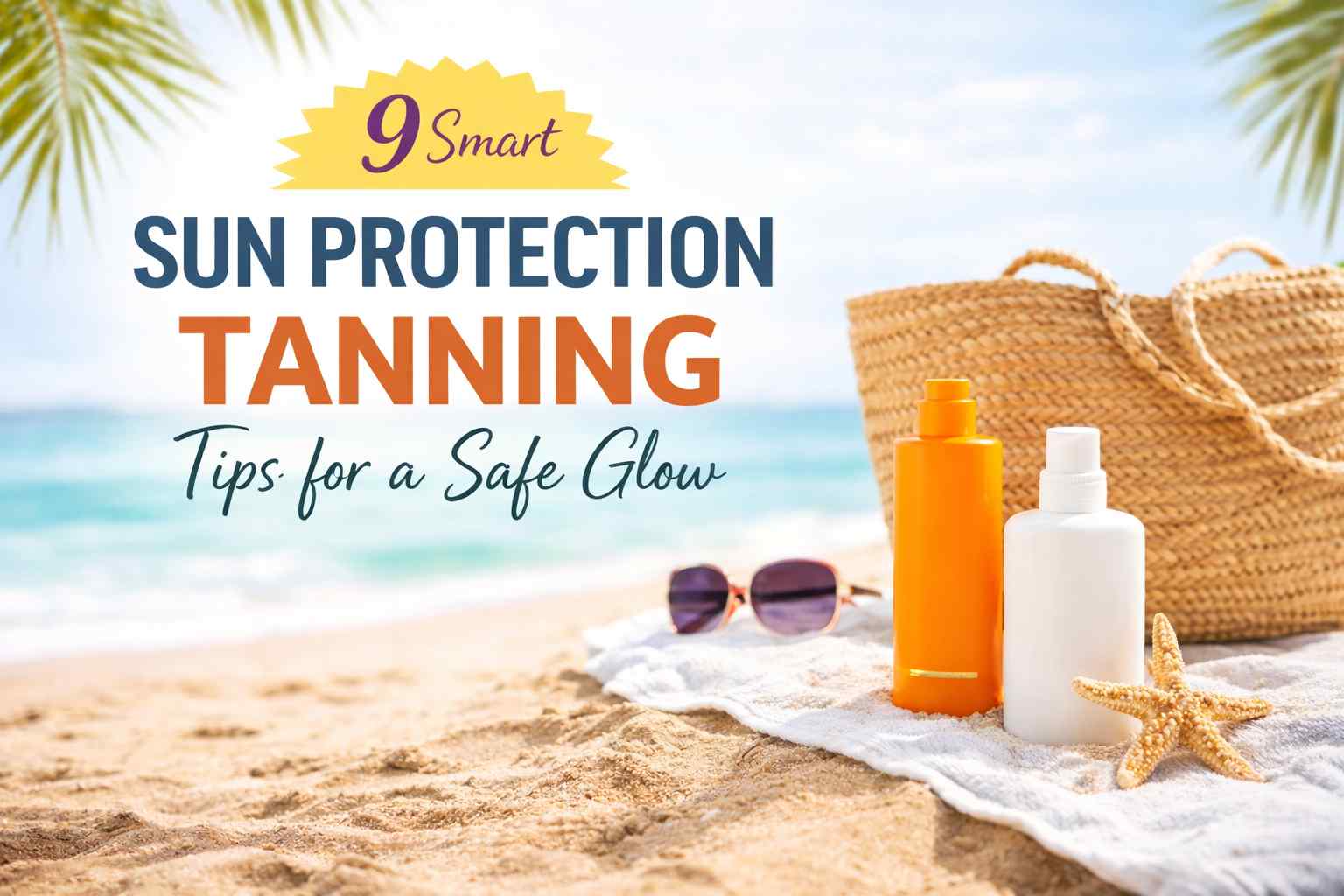
Sun protection tanning means achieving a visible tan while reducing skin damage from ultraviolet (UV) radiation. Sun protection tanning combines controlled UV exposure, broad-spectrum sunscreen, protective clothing, shade use, and skin care practices. Dermatology sources define tanning as a skin response to UV exposure. Photoprotection research links sunscreen use with lower DNA damage. Public health guidance links excessive UV exposure with skin cancer risk.
What Sun Protection Tanning Means
Sun protection tanning refers to skin darkening with risk control. Melanin production increases after UV exposure. Melanin absorbs a portion of UV radiation. Melanin does not block all UV radiation. Sunscreen reduces UV penetration. Protective measures reduce erythema and photoaging.
Sources: AAD; WHO.
Key entities and attributes
-
Ultraviolet radiation: UVA and UVB reach the skin surface.
-
Melanin: pigment that increases after UV exposure.
-
Sunscreen: topical product with SPF and broad-spectrum filters.
-
Photoprotection: practices that limit UV dose.
-
Photoaging: collagen loss and wrinkle formation from UV exposure.
Sources: AAD; CDC.
How Tanning Happens in the Skin
Tanning occurs through melanocyte activation. UVB triggers DNA stress in keratinocytes. Keratinocytes signal melanocytes. Melanocytes synthesize melanin. Melanosomes transfer pigment to keratinocytes. The epidermis darkens. UVA oxidizes existing melanin. UVA deepens visible color without increasing protection.
Sources: dermatology textbooks; AAD.
Health implications
-
UVB links to sunburn and direct DNA damage.
-
UVA links to deeper dermal damage and photoaging.
-
Repeated UV exposure increases cumulative skin injury.
Sources: WHO; AAD.
Sunscreen in Sun Protection Tanning
Sunscreen reduces UV dose during outdoor exposure. Broad-spectrum filters block UVA and UVB. SPF measures UVB burn protection. Higher SPF increases burn protection duration. No sunscreen blocks 100% of UV radiation. Proper application ensures labeled performance.
Sources: AAD; FDA.
How to use sunscreen effectively
-
Apply sunscreen to dry skin 15 minutes before sun exposure.
-
Apply 2 mg per cm² of skin for full labeled SPF.
-
Reapply every 2 hours and after swimming or sweating.
-
Use water-resistant formulas during water activities.
Sources: AAD; CDC.
Sunscreen filter types
| Filter Type | Examples | Coverage | Notes |
|---|---|---|---|
| Mineral | Zinc oxide, titanium dioxide | UVA + UVB | Immediate protection |
| Chemical | Avobenzone, octocrylene | UVA + UVB | Requires absorption time |
| Hybrid | Mineral + chemical | Broad-spectrum | Balanced texture |
| Sources: FDA; AAD. |
Protective Clothing and Shade
Protective clothing reduces UV penetration. Ultraviolet Protection Factor (UPF) rates fabric protection. UPF 50 blocks about 98% of UV radiation. Tightly woven fabrics increase UPF. Darker colors absorb more UV radiation. Hats with wide brims protect scalp and face. Sunglasses with UV400 protect ocular tissues. Shade reduces direct UV exposure.
Sources: WHO; CDC.
Protective gear checklist
-
Wear UPF-rated long sleeves.
-
Wear wide-brim hats.
-
Use UV400 sunglasses.
-
Seek shade during peak UV hours (10:00–16:00).
Sources: CDC; WHO.
Read Also: What Is Yalla Choy?
Timing and UV Index Management
UV Index quantifies daily UV intensity. Higher UV Index correlates with higher burn risk. Midday sun produces peak UV radiation. Cloud cover reduces but does not eliminate UV exposure. Sand and water reflect UV radiation and increase dose. Altitude increases UV exposure due to thinner atmosphere.
Sources: WHO; NOAA; CDC.
UV Index guidance
| UV Index | Risk Level | Protection Measures |
|---|---|---|
| 1–2 | Low | Basic protection |
| 3–5 | Moderate | Sunscreen, sunglasses |
| 6–7 | High | Protective clothing, shade |
| 8–10 | Very High | Limit exposure |
| 11+ | Extreme | Avoid midday sun |
| Sources: WHO; EPA. |
Skin Type and Risk Stratification
Skin phototype influences burn and tan response. Fitzpatrick skin types classify burn risk. Type I burns easily and tans minimally. Type VI rarely burns and tans deeply. All skin types accumulate UV damage. Melanin reduces but does not eliminate risk.
Sources: dermatology classification standards.
Phototype overview
| Type | Burn Tendency | Tan Response |
|---|---|---|
| I | High | Minimal |
| II | High | Light |
| III | Moderate | Moderate |
| IV | Low | Moderate |
| V | Low | High |
| VI | Very Low | High |
| Sources: dermatology standards. |
Pre-Exposure Skin Preparation
Skin barrier integrity affects UV response. Well-hydrated stratum corneum improves resilience. Antioxidants reduce oxidative stress. Vitamin C supports collagen synthesis. Vitamin E supports lipid protection. Niacinamide supports barrier function. These agents support skin health but do not replace sunscreen.
Sources: dermatology research; AAD.
Preparation actions
-
Cleanse skin gently.
-
Apply antioxidant serum in the morning.
-
Apply broad-spectrum sunscreen as the final step.
Sources: AAD.
After-Exposure Skin Care
Post-exposure care supports barrier repair. Cooling reduces erythema. Emollients restore lipids. Aloe vera provides soothing effects. Ceramides restore barrier lipids. Avoid exfoliation on sun-exposed skin. Monitor for erythema and blistering.
Sources: AAD; CDC.
After-sun care list
-
Cool skin with tepid water.
-
Apply fragrance-free moisturizer.
-
Use ceramide-rich creams.
-
Maintain hydration.
Sources: AAD.
Tanning Products and Alternatives
Self-tanners darken the stratum corneum through dihydroxyacetone (DHA). DHA reacts with amino acids to create temporary color. Self-tanners do not provide UV protection. Bronzing products provide cosmetic color without UV exposure. Spray tans provide uniform coverage when applied correctly.
Sources: FDA; dermatology product safety guidance.
| Method | UV Exposure | Protection | Duration |
|---|---|---|---|
| Natural sun tanning | Yes | Variable | Days to weeks |
| Self-tanner (DHA) | No | None | 3–7 days |
| Bronzer makeup | No | None | Same-day |
| Gradual tanner lotions | No | None | Build over days |
| Sources: FDA; AAD. |
Nutrition and Photoprotection
Diet influences skin resilience. Carotenoids accumulate in the skin. Beta-carotene and lycopene reduce oxidative stress. Omega-3 fatty acids modulate inflammation. Polyphenols support antioxidant capacity. Nutrition supports skin health but does not replace topical photoprotection.
Sources: nutrition and dermatology research.
Photoprotective nutrients
-
Carotenoids: carrots, tomatoes.
-
Polyphenols: green tea, berries.
-
Omega-3s: fish, flaxseed.
Sources: peer-reviewed nutrition research.
Myths and Evidence
Myth: A base tan protects against sunburn.
A base tan provides limited SPF equivalence and does not prevent DNA damage.
Sources: AAD; WHO.
Myth: Sunscreen prevents tanning completely.
Sunscreen reduces UV dose and allows gradual color change with lower damage.
Sources: AAD; FDA.
Myth: Cloudy days eliminate UV risk.
Clouds transmit a large fraction of UVA radiation.
Sources: WHO; CDC.
Monitoring Skin Health
Regular skin checks detect early changes. The ABCDE criteria guide mole assessment: Asymmetry, Border irregularity, Color variation, Diameter >6 mm, Evolution. Dermatologic screening improves early detection.
Sources: AAD; CDC.
Self-exam routine
-
Inspect face, scalp, and ears.
-
Inspect trunk and limbs.
-
Document changes monthly.
Sources: AAD.
Safety-Oriented Sun Exposure Plan
Plan exposure.
Plan exposure using daily UV Index data.
Source: EPA; WHO.
Apply protection.
Apply protection using broad-spectrum sunscreen and UPF clothing.
Sources: AAD; CDC.
Limit duration.
Limit duration during peak UV hours.
Sources: WHO; CDC.
Reapply protection.
Reapply protection every two hours and after water exposure.
Sources: AAD; FDA.
Inspect skin.
Inspect skin for erythema and lesions.
Sources: AAD.
Quick Reference
| Skin Need | Filter Type | SPF | Format |
|---|---|---|---|
| Sensitive skin | Mineral | 30+ | Lotion |
| Oily skin | Hybrid | 30+ | Gel |
| Outdoor sports | Chemical | 50+ | Water-resistant |
| Children | Mineral | 30+ | Cream |
| Sources: AAD; FDA. |
| Effect on UV Dose | |
|---|---|
| Time (10:00–16:00) | Increases |
| Altitude | Increases |
| Snow/sand | Reflects UV |
| Clouds | Partial reduction |
| Sources: WHO; NOAA. |
Best Practices Summary
-
Define sun protection tanning as controlled exposure with photoprotection.
-
Use broad-spectrum sunscreen with adequate application volume.
-
Combine sunscreen with UPF clothing and shade.
-
Track UV Index and modify exposure timing.
-
Support skin with antioxidants and barrier care.
-
Prefer self-tanners for color without UV exposure.
-
Monitor skin using ABCDE criteria.
Sources: AAD; WHO; CDC.
See More: Mobile Stand Up Desk: The Complete Guide for Flexible and Healthy Workspaces
FAQs on Sun Protection Tanning
Does gradual tanning reduce skin damage?
Gradual tanning reduces peak UV dose per session but cumulative damage persists with repeated exposure.
Sources: AAD; WHO.
Does water exposure increase sunburn risk?
Water reflects UV radiation and increases dose to exposed skin.
Sources: CDC; WHO.
Do tinted sunscreens protect as well as clear sunscreens?
Tinted sunscreens provide equivalent UV protection when labeled broad-spectrum with adequate SPF.
Sources: FDA; AAD.
Do antioxidants replace sunscreen?
Antioxidants support oxidative stress control but do not replace UV filters.
Sources: AAD; dermatology research.
Does higher SPF allow longer safe sun exposure?
Higher SPF reduces burn risk but does not permit unlimited exposure.
Sources: FDA; AAD.
Do indoor tanning devices support safe tanning?
Indoor tanning devices emit concentrated UVA and UVB and increase skin cancer risk.
Sources: WHO; FDA.
Does darker skin eliminate sun protection needs?
Darker skin contains more melanin but still accumulates UV damage and benefits from protection.
Sources: CDC; AAD.
Conclusion
Sun protection tanning integrates photoprotection, exposure control, and skin care. Dermatology authorities prioritize broad-spectrum sunscreen, protective clothing, shade, and monitoring. Public health agencies link UV exposure with skin cancer risk. Nutrition and topical antioxidants support skin resilience. Self-tanners provide cosmetic color without UV exposure.
Sources: AAD; WHO; CDC; FDA.