
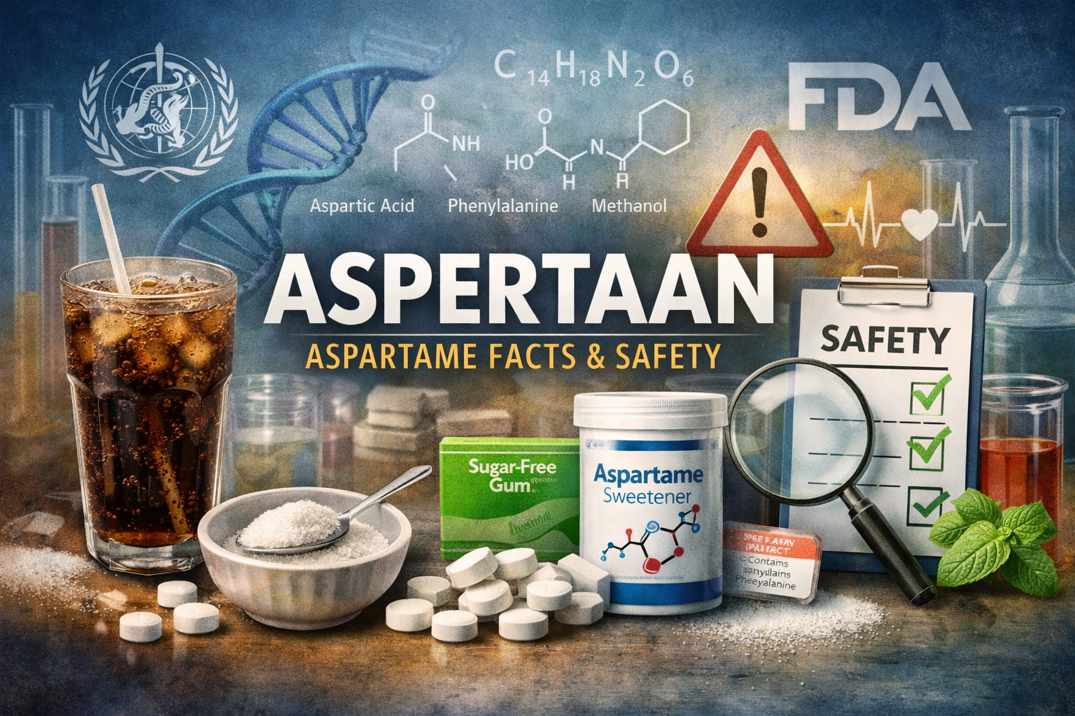
Aspertaan: Clear Meaning, Scientific Profile, Uses, Safety, and Practical Guidance
Aspertaan is a term used online to refer to aspartame, a low-calorie sweetener used in food and beverages. International health authorities evaluate aspartame for safety and intake limits. Regulatory agencies authorize its use in defined food categories. This guide explains identity, composition, applications, intake benchmarks, safety evidence, and real-world use with clear facts and concise structure.
What Aspertaan Means and Why the Term Appears Online
Aspertaan denotes aspartame in many web articles and product discussions. Food standards bodies recognize aspartame as the formal name. Labels list aspartame or its chemical name. The term “aspertaan” appears in informal content and domain names. Consumers encounter the substance through diet drinks, sugar-free gum, and tabletop sweeteners.
Key identifiers
-
Formal name: Aspartame
-
Chemical name: L-aspartyl-L-phenylalanine methyl ester
-
Functional class: Intense sweetener
-
Sweetness strength: ~200× sucrose
Chemical Composition and How the Body Processes Aspertaan
Aspartame contains two amino acids linked by a methyl ester. Digestion breaks the molecule into aspartic acid, phenylalanine, and methanol. Human metabolism processes these components through known biochemical pathways. Exposure amounts remain small because product formulations use very low quantities to reach sweetness targets.
Properties that matter
-
High sweetness allows low use levels
-
Limited heat stability affects baking
-
Better stability in cold and neutral pH products
Where Aspertaan Is Used in Foods and Products
Food manufacturers use aspartame to reduce added sugar while preserving sweetness. Beverage producers apply it in diet soft drinks and flavored waters. Confectionery brands include it in sugar-free gum and candies. Dairy processors add it to low-sugar yogurts and desserts. Tabletop sweeteners provide portion-controlled packets for home use. Some medicines use it for flavor masking.
Common product categories
-
Diet sodas and zero-sugar drinks
-
Sugar-free chewing gum
-
Low-sugar yogurts and puddings
-
Tabletop sweetener sachets
-
Oral medicines and supplements
Formulation notes
-
Combine with acesulfame potassium for smoother sweetness curves
-
Avoid prolonged heat exposure in recipes
-
Maintain moisture control for shelf stability
Intake Benchmarks and What “Safe Amount” Means
Health authorities set an Acceptable Daily Intake (ADI) for aspartame at 0–40 mg per kilogram of body weight per day. ADI represents a daily intake level that remains without appreciable health risk across a lifetime. Typical population intakes fall below this benchmark in dietary surveys.
Example intake context (illustrative)
A 60-kg adult has an ADI of 2,400 mg/day. Reaching this level requires unusually high consumption of diet beverages in a single day. Normal consumption patterns remain well under ADI for most consumers.
See Also: Sun Protection Tanning: Safe Methods, Science, and Skin Health
Safety Evidence and How Evaluations Are Made
Safety assessments integrate animal toxicology, human observational studies, and intake modeling. International panels review new evidence and update conclusions. Regulatory agencies authorize uses within category limits and monitor post-market data. Evaluations distinguish hazard identification from dietary risk at real-world exposure levels.
What the evidence shows
-
Toxicology studies identify thresholds far above typical dietary exposure
-
Human studies do not show consistent harmful effects at normal intake
-
Intake modeling indicates average exposure remains below ADI
Important distinctions
-
Hazard classification identifies potential under specific conditions
-
Risk assessment evaluates actual exposure from diets
-
Regulatory decisions rely on risk at approved use levels
Special Considerations and Who Should Avoid Aspertaan
People with phenylketonuria (PKU) require strict control of phenylalanine intake. Aspartame contains phenylalanine and is not suitable for PKU. Product labels disclose phenylalanine content to support safe choices. Individuals with sensitivity reports can monitor personal tolerance with clinician guidance.
Groups and guidance
-
PKU: Avoid products containing aspartame
-
Pregnancy: Intake within ADI aligns with regulatory evaluations
-
Children: Intake benchmarks apply by body weight
Dental, Blood Sugar, and Energy Context
Aspartame does not provide fermentable sugar to oral bacteria. Sugar-free products reduce cariogenic substrate compared with sucrose-sweetened items. Aspartame contributes negligible calories because use levels are low. Products sweetened with aspartame do not raise blood glucose via carbohydrate load, which supports reduced-sugar dietary patterns.
Storage, Cooking, and Stability in Daily Use
Aspartame performs best in cold beverages and ready-to-eat foods. Prolonged heating degrades sweetness. Home cooking benefits from adding sweeteners after heating steps when recipes allow. Manufacturers control pH and moisture to preserve taste across shelf life.
Practical tips
-
Prefer cold applications for maximum sweetness retention
-
Avoid long baking times with aspartame
-
Store tabletop sweeteners in dry conditions
Labeling, Compliance, and Consumer Transparency
Food labels list aspartame by name and include phenylalanine statements for PKU awareness. Food standards define permitted food categories and maximum use levels. National regulators enforce compliance and monitor safety data. International standards harmonize specifications across markets.
Aspertaan vs. Common Sweeteners
| Attribute | Aspertaan (Aspartame) | Sucralose | Stevia Glycosides | Sucrose |
|---|---|---|---|---|
| Sweetness vs sugar | ~200× | ~600× | ~200–300× | 1× |
| Calorie contribution | Negligible | Negligible | Negligible | 4 kcal/g |
| Heat stability | Low | High | Moderate | High |
| PKU suitability | Not suitable | Suitable | Suitable | Suitable |
| Typical uses | Drinks, gum, yogurt | Baking, drinks | Drinks, tabletop | All foods |
Step Lists for Informed Use
Choose products
-
Read ingredient lists for aspartame
-
Note phenylalanine statements for PKU
-
Compare sweetener blends for taste preference
Manage intake
-
Track portions across beverages and snacks
-
Balance reduced-sugar products with whole foods
-
Keep consumption within ADI by body weight
Prepare recipes
-
Add sweetness after heating when possible
-
Select heat-stable sweeteners for baking
-
Store packets away from moisture
Read Also: Doctiplus: A Complete Guide to the Digital Healthcare Platform
Myths and Clarifications
Claim: Aspartame equals sugar in calories.
Fact: Aspartame contributes negligible calories at use levels.
Claim: Normal intake exceeds safety limits.
Fact: Population intake surveys report exposure below ADI.
Claim: All sweeteners act the same in recipes.
Fact: Heat stability varies by sweetener class.
FAQs About Aspertaan
What does “aspertaan” mean on websites?
Aspertaan is an informal label used online for aspartame, a regulated food sweetener.
Does aspertaan change gut microbiota?
Research examines non-nutritive sweeteners and microbiome markers. Regulatory reviews evaluate total evidence without consistent harmful findings at typical intake.
Can aspertaan be combined with other sweeteners?
Product formulators blend aspartame with acesulfame potassium to refine sweetness profiles and aftertaste.
Is aspertaan suitable for sports drinks?
Formulations use aspartame in low-calorie hydration products where sweetness without sugar is desired.
How does storage affect taste?
Moisture and heat reduce stability. Dry, cool storage preserves sweetness in tabletop products.
Do labels list phenylalanine clearly?
Food labeling standards require phenylalanine disclosure to protect people with PKU.
Practical Checklist for Consumers
-
Identify aspartame on labels
-
Confirm PKU suitability before purchase
-
Prefer cold applications for best taste
-
Track portions across multiple products
-
Balance sweetened items with nutrient-dense foods
Conclusion
Aspertaan refers to aspartame, a high-intensity sweetener used to reduce added sugar in foods and drinks. Health authorities set clear intake benchmarks and maintain regulatory oversight. Safety evaluations integrate toxicology, human data, and exposure modeling. Product performance depends on heat stability and formulation choices. Transparent labeling supports informed selection, and PKU remains the primary contraindication.